
SKF H 309 Adapter Sleeve: KM 9, MB 9, Dimensions and Bearing Mounting Guide
The SKF H 309 is a metric adapter sleeve that allows bearings with a tapered bore to be mounted on cylindrical shafts. The SKF system uses the H 309 sleeve together with the KM 9 lock nut and the MB 9 locking washer. These three parts work together to position the bearing on the shaft, to drive it up the tapered seat and, once mounting is complete, to lock the nut mechanically.
SKF’s current product data gives the following dimensions for the H 309: 40 mm shaft diameter, 45 mm bearing seat diameter, 65 mm locknut outside diameter, 39 mm sleeve length and M45×1.5 thread. The SKF H 309 product record confirms these values. In SKF’s bearing accessories catalogue, the H 309 row also shows the KM 9 lock nut and MB 9 locking washer as matching parts. SKF adapter sleeves technical table
To review the physical products individually at Öz Rulman, you can use the product pages for the SKF H 309 adapter sleeve, the SKF KM 9 lock nut and the SKF MB 9 locking washer.
SKF H 309 technical specifications
| Technical specification | Value |
|---|---|
| Brand | SKF |
| Product code | H 309 |
| Product type | Adapter sleeve |
| English product name | Adapter sleeve |
| Suitable shaft diameter | 40 mm |
| Bearing seat diameter | 45 mm |
| Locknut outside diameter | 65 mm |
| Sleeve length | 39 mm |
| Locking part width | 11 mm |
| Thread | M45 × 1.5 |
| Outer taper | 1:12 |
| Lock nut | KM 9 |
| Locking washer | MB 9 |
| Mounting type | Mounting a bearing with a tapered bore on a cylindrical shaft |
| Dimension standard | Adapter sleeve system covered by ISO 2982-1 |

SKF’s current catalogue table gives the H 309 dimensions and the KM 9 / MB 9 combination in the same product row. SKF bearing accessories catalogue
ISO 2982-1:2013 defines the limit dimensions of adapter sleeves with a 1:12 taper used with bearings. ISO reviewed and confirmed this standard in 2024. ISO 2982-1:2013
What is an adapter sleeve?
An adapter sleeve is a mechanical intermediate element that allows a bearing with a tapered bore to be mounted on a cylindrical shaft.
The inner ring of the bearing sits directly on the 1:12 tapered outer surface of the sleeve. The inner surface of the sleeve, in turn, sits on the cylindrical shaft. When the lock nut is tightened, the bearing is driven axially up the tapered surface. As a result the inner ring of the bearing expands and the required interference is created between the shaft, sleeve and bearing.
SKF describes adapter sleeves as bearing accessories that can be used both on plain shafts and, with suitable distance rings, on stepped shafts. SKF adapter sleeves product group
This design offers an important advantage: a standard cylindrical shaft can be used instead of machining a tapered seat directly on the shaft for the bearing.
However, an adapter sleeve is not just a mechanical converter. How far the bearing is driven up the tapered surface also affects the final internal clearance and the mounting interference of the bearing.
How do the H 309, KM 9 and MB 9 work together?
The H 309 system consists of three basic parts.
SKF H 309 adapter sleeve
The H 309 carries the inner ring of the bearing on its tapered outer surface. The slotted design of the sleeve allows a tight connection to form between the sleeve and the shaft as the lock nut is tightened.
SKF KM 9 lock nut
The KM 9 screws onto the M45×1.5 thread on the H 309. As the nut is tightened it pushes the bearing forward on the tapered surface of the sleeve.
Stock and quotation information can be obtained from the KM 9 SKF product page at Öz Rulman.
SKF MB 9 locking washer
The MB 9 is the mechanical locking part that prevents the KM 9 nut from turning by itself during operation.
In the system SKF uses for KM series lock nuts, the inner tab of the washer sits in a keyway on the shaft or sleeve. After mounting is complete, a suitable outer tab of the washer is bent into the slot on the KM nut. The nut is thus mechanically locked against turning. SKF uses this locking principle for the KM, KML and HM series. SKF lock nuts and MB washers technical description
The MB 9 SKF locking washer product page at Öz Rulman can be used to reach this separate spare component of the system.
Which bearings can the H 309 be used with?
The H 309 is an adapter sleeve that can be used with suitable bearings with a 45 mm tapered bore diameter and a 1:12 taper.
The critical phrase here is “suitable bearing”. Not every bearing with the same 45 mm bore can be used with the H 309. The bearing must:
- have a tapered bore,
- have a taper ratio of 1:12,
- be in the product group that the manufacturer matches with the H 309
.
SKF’s current product system shows the H 309 adapter sleeve directly as a supporting product on, for example, the 22209 EK and 22209 EK/C3 spherical roller bearings. SKF 22209 EK product record
The 45 mm tapered bore and 1:12 taper of this product are also confirmed on the same SKF page.
However, in purchasing or interchange work it is not right to look only at the number “309”. The basic bearing type, bore design, taper, internal clearance and the manufacturer’s product matching must be checked together.
What does the 1:12 taper on the H 309 mean?
A 1:12 taper defines the ratio of the change in diameter of the tapered surface to the axial length.
As the bearing inner ring is driven up the sleeve, the tapered surface expands the inner ring. A tight fit is thus formed between the bearing inner ring and the sleeve.
ISO 2982-1 standardizes the limit dimensions of 1:12 adapter sleeves used for rolling bearing accessories. ISO 2982-1:2013
For this reason the application under the H 309 code is not merely “fitting a sleeve on a 40 mm shaft”. The sleeve is a precise mounting element that works together with the tapered bore geometry of the bearing.

Why does mounting a bearing with a tapered bore change the internal clearance?
As a bearing with a tapered bore is driven axially up the H 309, the inner ring diameter increases.
This expansion reduces the initial radial internal clearance of the bearing.
The technician should therefore not simply turn the nut until it feels “tight enough”. This is because driving up too far can cause:
- excessive reduction of the radial internal clearance,
- unwanted preload,
- increased friction,
- a rise in operating temperature,
- reduced bearing life
.
SKF’s official mounting document requires that, when mounting a bearing on an adapter sleeve, a starting position is first determined and then the drive-up or tightening method defined for the bearing series and diameter is applied. SKF Bearing Installation mounting guide
The same document also recommends fitting the locking washer after the bearing has been driven up the tapered surface. This way the washer is not damaged by the mounting force.
How is the H 309 mounted?
The steps below explain the basic working logic of the H 309 system. For the full mounting procedure, the current SKF instruction for the bearing in question should always be followed.
Check the shaft and sleeve
The shaft surface must be clean, burr-free and undamaged.
The H 309 sleeve's:
- tapered surface,
- threads,
- slot,
- inner surface
must be checked.
No dirt, rust or hard particles should remain on the contact surfaces.
Place the H 309 sleeve on the shaft
The sleeve is placed on the 40 mm nominal cylindrical shaft.
The axial position of the bearing is determined according to the application. Because the adapter sleeve can be used on a plain shaft, it is possible to position the bearing at a chosen location along the shaft.
Bring the bearing with the tapered bore onto the sleeve
The large end of the tapered bore of the bearing must match the tapered geometry of the sleeve in the correct direction.
The SKF mounting guide specifically describes placing the bearing on the adapter sleeve with the taper geometry in the correct direction. SKF Bearing Installation
Create the initial tightness with the KM 9 nut
The KM 9 nut is fitted on the M45×1.5 thread of the H 309.
In the first stage the nut is tightened by hand or with a suitable SKF hook spanner. The aim is to establish the starting position in which the sleeve no longer moves axially or circumferentially on the shaft.
This position is not the final mounting.
Drive the bearing up by the amount specified by the manufacturer
The method used at this stage can vary depending on the bearing type.
For various bearings SKF uses methods such as:
- tightening angle,
- axial drive-up,
- reduction in radial internal clearance,
- hydraulic nut,
- SKF Drive-up Method
.
It is therefore technically incorrect to state a single universal value for the H 309 such as “the KM 9 nut is tightened this many degrees”.
The bearing code must be checked in SKF and other manufacturer catalogues.
Fit the MB 9 washer
When the final drive-up is complete, the KM 9 is removed and the MB 9 locking washer is fitted in the correct direction.
According to SKF’s mounting guide, the inner tab of the washer must sit in the keyway of the sleeve. The KM 9 is then tightened again. SKF Bearing Installation
Lock the KM 9 nut
When the nut reaches its final position, the most suitable outer tab on the MB 9 is bent into the slot of the KM 9 nut.
If the nut slot has only just passed the washer tab, SKF recommends tightening the nut further to the next suitable locking position instead of loosening it back. The washer tab must also not be over-bent down to the bottom of the nut slot. SKF Bearing Installation
Check the rotation of the bearing after mounting
After mounting is complete, the shaft and the bearing ring should turn freely by hand and should not show abnormal binding.
Depending on the application, the radial internal clearance or axial position should also be verified.

Why is the KM 9 nut locked with an MB 9 washer?
During operation a bearing system can encounter:
- vibration,
- variable load,
- acceleration and deceleration,
- thermal expansion
and similar effects.
For this reason, relying on thread friction alone is not considered sufficient to hold the position of the lock nut in some installations.
SKF’s KM series nuts are secured mechanically with MB or MBL series locking washers. ISO 2982-2 also defines the dimensions of lock nuts with four slots and locking washers with flat inner tabs. ISO 2982-2:2013
ISO reviewed and confirmed this standard in 2024.
Although this mechanical locking system looks simple, it can cause problems if used incorrectly.
SKF’s bearing damage guide states that used or incorrectly bent locking washers can come into contact with the cage or seals. SKF therefore recommends that damaged locking washers are not reused. SKF Bearing Damage guide
Can an MB 9 washer be reused?
Even if the washer looks physically sound, its locking tabs have undergone plastic deformation during the previous installation.
SKF’s damage analysis guide states that used locking washers may have invisible tab damage and that the tab may break off later. SKF therefore recommends not reusing locking washers. SKF Bearing Damage
For this reason, if the H 309 or KM 9 is to be reused, the condition of the MB 9 washer should not be assessed separately; a new washer should be used as the rule.
Is an adapter sleeve the same as a withdrawal sleeve?
No.
An adapter sleeve and a withdrawal sleeve work similarly with bearings with a tapered bore; however, their mounting geometries are different.
An adapter sleeve is used to fix a bearing with a tapered bore on a cylindrical shaft.
A withdrawal sleeve, on the other hand, is generally pulled in through the bearing in a stepped shaft design.
On the Öz Rulman website, alongside the H series adapter sleeves, there are also withdrawal sleeve products such as the AH 309 SKF withdrawal sleeve.
It is therefore not right to use the codes H 309 and AH 309 in place of each other just because the numbers are similar.
Are the H 309 and H 309 E the same?
No.
In the Öz Rulman product catalogue, H 309 E SKF is listed as a separate product.
In SKF catalogues, E designs may use a different locking solution from the standard KM + MB system. The full product code must therefore be preserved when ordering H 309, H 309 E or any other variant.
Writing only “309 sleeve” in purchasing requests can lead to the wrong variant being selected.
Is it enough to look only at the shaft diameter when choosing the H 309?
No.
The 40 mm shaft diameter is one of the basic data points in selecting the H 309, but it is not the only criterion.
The following information must also be checked:
- the full code of the bearing,
- whether the bearing bore is tapered,
- the taper ratio,
- the bearing bore diameter,
- the thread size of the sleeve,
- the lock nut,
- the locking washer,
- the shaft diameter,
- the bearing arrangement,
- the initial and operating internal clearance.
For example, the bearing seat diameter of the SKF H 309 is 45 mm. The H 309 therefore allows a suitable group of bearings with a 45 mm nominal tapered bore to be mounted on a 40 mm cylindrical shaft.
What does the K in a bearing code mean?
In many SKF bearing series, the suffix K denotes a 1:12 tapered bore.
For example, in the technical record of the SKF 22209 EK, the bore type is shown directly as Tapered 1:12, and SKF lists the H 309 adapter sleeve as a supporting product on the same page. SKF 22209 EK technical data
However, one should not automatically assume that the letter K is used in the same context in all manufacturers’ codes. Checking the current code system of the manufacturer concerned is the safest method in interchange work.

What are the advantages of an adapter sleeve?
Used correctly, an adapter sleeve offers several important advantages.
Allows the use of a cylindrical shaft
It can eliminate the need to machine a tapered shaft directly for the bearing.
Provides positioning flexibility on the shaft
On a plain shaft, the axial position of the bearing can be chosen to a certain extent according to the application.
Can make mounting and dismounting easier
With the lock nut and suitable mounting equipment, the bearing can be driven up the sleeve in a controlled way.
Works with standard bearing accessories
The H 309, KM 9 and MB 9 pairing is part of SKF’s standard product system.
However, all of these advantages apply only with the right surface, the right bearing and the right mounting procedure.
What can happen if the H 309 is mounted incorrectly?
Incorrect mounting can lead to several different problems.
Insufficient drive-up:
The interference between the bearing and the sleeve may be insufficient. As a result, creep or relative movement can occur between the ring and the mounting surface.
Excessive drive-up:
The internal clearance of the bearing can be reduced more than necessary and unwanted preload can occur.
Dirty mounting surface:
The sleeve or bearing may not seat properly.
Damaged thread:
It can prevent the KM 9 nut from advancing properly.
Incorrect locking:
If the MB 9 tab does not sit in the correct slot, the mechanical security of the nut can be reduced.
Reusing a used washer:
SKF recommends not reusing locking washers that have been bent before.
For this reason, in bearing mounting the sleeve, nut and washer should be evaluated as a single system.
How can stock, price and lead time information for the SKF H 309 be obtained?
Current stock and price information for the SKF H 309 may vary depending on the order quantity and supply situation.
Product pages:
You can review different bearings, sleeves and mounting accessories in the Öz Rulman product catalogue.
Sharing the following information in a quotation request speeds up the process:
- the H 309 product code,
- the full code of the bearing to be used,
- the quantity requested,
- whether the KM 9 and MB 9 are to be included in the set,
- the delivery city or country,
- the required delivery date.
For current quotation, stock and lead time information you can use the Öz Rulman contact form.
Which shaft diameter is the SKF H 309 suitable for?
The H 309 is designed for a 40 mm nominal cylindrical shaft diameter. The bearing seat diameter is 45 mm.
Source: SKF H 309 product data
Which nut and washer is the H 309 used with?
According to the SKF catalogue table, the H 309 is matched with the KM 9 lock nut and the MB 9 locking washer.
Source: SKF adapter sleeves technical catalogue
Öz Rulman products: KM 9 SKF and MB 9 SKF

What is the taper of the H 309 sleeve?
The standard H 309 adapter sleeve has a 1:12 tapered outer surface.
ISO 2982-1 covers the limit dimensions of adapter sleeves with a 1:12 taper for rolling bearings.
Source: ISO 2982-1:2013
Why is a KM 9 nut used on the H 309?
The KM 9 drives the bearing axially up the tapered surface of the H 309 and holds the bearing in place at the end of mounting.
After mounting is complete, the nut is mechanically locked with the MB 9 washer.
How does the MB 9 washer lock?
The inner tab of the MB 9 sits in the keyway in the sleeve. A suitable outer tab is bent into the slot of the KM 9 nut. The washer thus limits the nut from turning by itself.
Source: SKF lock nut system
Can a used MB 9 washer be reused?
SKF recommends not reusing used locking washers. A locking or anti-rotation tab bent during the previous installation may carry invisible damage.
Source: SKF Bearing Damage
Can every 45 mm bearing be used with the H 309?
No.
The bearing must have a 45 mm nominal tapered bore and be designed with a taper compatible with the sleeve. The SKF product database also shows the H 309 as a supporting product for suitable bearings.
Example: SKF 22209 EK
What is the difference between the H 309 and the AH 309?
The H 309 is an adapter sleeve. The AH 309 is in the withdrawal sleeve class and is used in a different mounting geometry.
AH 309 SKF is available as a separate product at Öz Rulman.
Is it right to tighten the nut all the way when mounting the H 309?
No.
The final mounting position must be determined according to the manufacturer’s mounting procedure for the bearing used. Excessive drive-up can reduce the radial internal clearance more than necessary.
Source: SKF Bearing Installation
Latest Posts
- Unstable and High Angular Readings in Laser Shaft Alignment: Causes and Solutions (Field Case)
 If the angular misalignment on a laser shaft alignment tool changes from one measurement to the next while the parallel offset stays constant, the problem is usually in the setup. A real field case, likely causes and a step-by-step checklist.
- What Is a Machinery Shim? Shaft Alignment and Soft Foot Correction Guide with the SKF TMAS 100/KIT
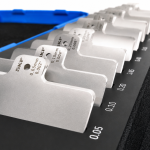 Correct alignment of rotating machinery is not completed just by measuring two shafts. The vertical deviation found by the measurement has to be corrected physically. To change the height of an electric motor, pump, fan, gearbox or any other rotating machine precisely, precision shims of specific thicknesses are placed under the machine feet. The SKF TMAS 100/KIT is a stainless steel 100 × 100 mm… Read more: What Is a Machinery Shim? Shaft Alignment and Soft Foot Correction Guide with the SKF TMAS 100/KIT
- Bearing Companies and Bearing Suppliers: How to Find the Right Product
 When an industrial bearing is needed, not everyone starts the search with a product code. A maintenance technician searches for the code on the bearing, while a purchasing department may use more general phrases such as bearing companies, bearing suppliers, bearing prices, or a city-based term such as Kayseri bearing dealer. In bearing supply, however, finding the product is not enough. Brand, bearing type, dimensions, internal clearance, sealing design, operating conditions… Read more: Bearing Companies and Bearing Suppliers: How to Find the Right Product
- SKF PCM 303430 E: PTFE Composite Plain Bearing Bush Technical Guide
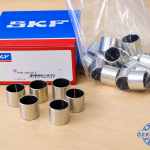 The SKF PCM 303430 E is a metric PTFE composite plain bush developed for compact bearing arrangements where the sliding contact principle is suitable instead of a rolling bearing. With a 30 mm bore and only a 34 mm outside diameter, and a nominal wall thickness of 2 mm, it forms a very compact bearing solution. However, this thin structure does not mean the product is designed for low loads… Read more: SKF PCM 303430 E: PTFE Composite Plain Bearing Bush Technical Guide
- Fast Dispatch from Stock for Industrial Spare Parts: Bearing Supply and DeliveryWhen a breakdown occurs on a production line, the first problem the maintenance team faces is not always diagnosing the fault. Even after the required part has been identified, not being able to find it or having to wait for its delivery can directly extend the maintenance time. For this reason, fast dispatch from stock for industrial spare parts should not be seen only as a logistics service. Having the right product in stock, checking the product code, preparing for dispatch… Read more: Fast Dispatch from Stock for Industrial Spare Parts: Bearing Supply and Delivery


